May 29 2014
School of Visual Arts
Division of Studio Art
P.O. Box 305100
Denton, TX 76203
Dear Professor,
Let me introduce myself. My name is Alexandra Nguyen. I am currently a senior at Liberty High School in Frisco, Texas. I have been in art for the past 4 years. Last year, I was in AP Art Drawing and this year I am in AP Art 2D. At this moment, I am preparing to graduate high school and attend a university in the next fall.
It is my intent to pursue further development in skill in my artistic skills and meet new people who are in the same field as me. Through my high school career, I have shown my passion toward the fine arts and my drive for a higher education. I am in the top 15% of my class and have been taking higher level thinking classes to help develop my brain more to prepare for upcoming college. From my current and past experiences, I've learned that art is more than just a picture on paper. It's the process and the goal to achieve your finish project. Art is about expression and the growth of the artist. While creating the artwork, the feelings and intent of the artist is flown into the artwork and seeing how people react and view their work is a satisfying feeling. I want to continue feeling like this and achieving more goals and affecting more people with my artwork. I have decided to continue learning AP Art skills and techniques to help pursue my dreams and interests.
I have explored many colleges that specialize in the art industry and have concluded that I would be a perfect fit for your college. I am a hard worker and extremely responsible and open minded. With the help of experienced professors, I would gain more improvement and creative levels in my study of art.
Please consider my application. Thank you for your time. I look forward to hearing from you.
Sincerely,
Alexandra Nguyen
Plano, TX
(469)555-5555
nguyen.a.m96@gmail.com
Thursday, May 29, 2014

Curriculum Vitae
Alexandra Nguyen
Plano, TX
(469)555-5555
nguyen.a.m96@gmail.com
Statement of Professional
To earn a degree in Forensic Sciences
Current Position
High school senior at Liberty High School
Education
Windrows Elementary School (K)
Shawnee Trail Elementary (1-2)
Borchardt Elementary (3-5)
Fowler Middle School (6-8)
Liberty High School (9-12)
Group Exhibitions
Artwork was shown at Youth Art Month in 2012 and 2013
Workshops Attended
NAHS Projects
Languages Spoken
English (mother tongue)
Vietnamese (moderately)
French (moderately)
References
Ms. Pernie Fallon
Instructor of Art
Liberty High School
15250 Rolator Road
Frisco, Texas 75035
469-633-5855 x 25897
fallonp@friscoisd.org
Mr. Bruce Stevenson
Instructor of Music
Liberty High School
15250 Rolater Road
Frisco, Texas 75035
469-633-5835
stevensb@friscoisd.org
Mrs. Karen Wood
CounselorLiberty High School15250 Rolater RoadFrisco, TX469-633-5815
woodk@friscoisd.org
Plano, TX
(469)555-5555
nguyen.a.m96@gmail.com
Statement of Professional
To earn a degree in Forensic Sciences
Current Position
High school senior at Liberty High School
Education
Windrows Elementary School (K)
Shawnee Trail Elementary (1-2)
Borchardt Elementary (3-5)
Fowler Middle School (6-8)
Liberty High School (9-12)
Group Exhibitions
Artwork was shown at Youth Art Month in 2012 and 2013
Workshops Attended
NAHS Projects
Languages Spoken
English (mother tongue)
Vietnamese (moderately)
French (moderately)
References
Ms. Pernie Fallon
Instructor of Art
Liberty High School
15250 Rolator Road
Frisco, Texas 75035
469-633-5855 x 25897
fallonp@friscoisd.org
Mr. Bruce Stevenson
Instructor of Music
Liberty High School
15250 Rolater Road
Frisco, Texas 75035
469-633-5835
stevensb@friscoisd.org
Mrs. Karen Wood
CounselorLiberty High School15250 Rolater RoadFrisco, TX469-633-5815
woodk@friscoisd.org
Tuesday, May 27, 2014
Artistic Genealogy / Artistic Pedigree

Walt Disney - He created many childhood movies that have taught me so many lessons about life and pursuing your dreams. The characters he created are not perfect, just as a normal human being should be. He lets people have their dreams and imagination and the hope for something greater to happen in their lives.
Tim Burton - He creates creepy looking movies, but each have a significant story to them. Although each character are paled and thin boned, almost like a skeleton, there is more to them than meets the eye. He taught me not to judge by people's appearances and their appearances also add up to who they are as a person.
Bones - This show displays scenes of death and gore of the human body. This has fascinated me greatly on the entrails and anatomy of the body. It makes me want to explore more through the art I create now and hope to capture it the same way they do in Bones.
Beethoven - He is the musician who grew deaf and could not hear his own music, but this didn't stop him from playing or creating music. He is a renowned musician and it thought well of for his work. He taught me that even with a disability he can achieve his dreams and goals.
Hayao Miyazaki - He created movies that doesn't show the cliche romance ending. Instead, he uses a boy and girl character and gives them a different type of relationship - trust, fun, and kindness. These relationships grow as the movie progresses and in the end, it's what keeps them together.
Joe Hisaishi - The music he creates reflect the emotion of movie scenes very well. He uses this musical psychology to affect the viewers and draw them into the movie more. I hope to be able to affect people's emotions just like he has.
Artist's Statement
For as long as I can remember, I've been drawing with the simplest tool - a pencil. It's metallic, gray characteristic was the only thing I felt capture my imagination well. In elementary school, I lacked interaction with the human society, causing me to be deprived of the outside world and its news. This has influenced my taste in art and the artworks I create now.
With my artwork, I use the human anatomy, something I'm not all that familiar with and something I desire to interact in my life. I position them in many angles, catching dramatic areas along with simplistic areas. I use simple tones like gray and black. Rather than a simple pencil, I use charcoal or pastel to achieve blending and texture of my model.
With my artwork, I use the human anatomy, something I'm not all that familiar with and something I desire to interact in my life. I position them in many angles, catching dramatic areas along with simplistic areas. I use simple tones like gray and black. Rather than a simple pencil, I use charcoal or pastel to achieve blending and texture of my model.
Tuesday, May 20, 2014
Statement of Current Research
Currently I am creating a series of anatomical and monochromatic pieces with basic pastels and charcoal, mostly using the gray scale. My previous works consisted mostly of skeleton positions with a simple and basic feel to them. In my new works, I will be using new mediums that are more tedious to use to create different textures and designs to them. This new introduction of mediums will help give more variety and diversity to the artwork I will create. This approach will help me achieve a more dramatic feel to my artworks and convey my emotions.
Sunday, January 5, 2014

Saturday, October 19, 2013
Concentration Idea
What is the central idea of your concentration?
The central idea of my concentration is the life lessons people learn from the famous and heartwarming Disney movies. My whole childhood was built off of these movies and helped me love myself and the world around me even more than I did before. From Snow White to Monsters University, each movie holds some diversity in morals.
How will the work in your concentration demonstrate the exploration of your idea?
For each little life lesson, I hope to create a scene or design that portrays it. I wish to give them a magical aura like how each movie has touched my heart in a magical way.
The central idea of my concentration is the life lessons people learn from the famous and heartwarming Disney movies. My whole childhood was built off of these movies and helped me love myself and the world around me even more than I did before. From Snow White to Monsters University, each movie holds some diversity in morals.
How will the work in your concentration demonstrate the exploration of your idea?
For each little life lesson, I hope to create a scene or design that portrays it. I wish to give them a magical aura like how each movie has touched my heart in a magical way.
Monday, September 30, 2013
Shape/Volume
How is the illusion of volume created in the shapes?


They appear to take up a certain amount of space.
Can you identify additional volumetric shapes in other areas of the composition?
Rectangular prism
How are these basic shapes altered in each work?
Their positions change and so did their colors.
How do these alterations add interest to the composition?
They give it more depth, perspective and attraction.
Saturday, September 21, 2013
Shape
Aaron Douglas

 She uses similar shapes to coincide together to create another image through the combined shapes.
 He uses the shape of the fingers to display the gentle yet intimate touch of the human beings.
 He uses the shapes to create the transition from one animal to the next, showing that they are actually similar in shape.
 He uses many intricate shapes to create an overall piece, some shapes more repeated than others.
 He uses an abstract form of shapes to create a collage of many different objects.
 She uses more free formed shapes to create and image that doesn't really look like anything relate-able.
 He uses many colorful shapes, very closely conjoined together, to create a story through the artwork.
 He uses shape in a very simplistic way and the shapes are just blades or grass and it's all in black and white for contrast.
Robert Moskowitz
 He uses shape in the form of a body part. It's a positive and negative interpretation of an arm and a hand.
Charles Demuth
 He uses the shapes to overlap each other, giving it a more feeling of depth rather than just being 2D.
 He uses shape to create a horizon-like scenery and the shape of the man's head instead of the sun.
Romare Beardon
 He uses shape to create a collage of a story, which he tells with the specific way he placed the cut out shapes.
 He uses abstract shapes overlapped on each other to create a colorful and dynamic piece.

He uses distinct shapes to define the body of the men but also enhances the size and color to define the importance of it.
Elizabeth Murray
 She uses similar shapes to coincide together to create another image through the combined shapes.
Bill Brandt
 He uses the shape of the fingers to display the gentle yet intimate touch of the human beings.
M.C. Escher
 He uses the shapes to create the transition from one animal to the next, showing that they are actually similar in shape.
David McNutt
 He uses many intricate shapes to create an overall piece, some shapes more repeated than others.
Robert Rauschenberg
 He uses an abstract form of shapes to create a collage of many different objects.
Helen Frankenthaler
 She uses more free formed shapes to create and image that doesn't really look like anything relate-able.
Wassily Kandinsky
 He uses many colorful shapes, very closely conjoined together, to create a story through the artwork.
Ansel Adams
 He uses shape in a very simplistic way and the shapes are just blades or grass and it's all in black and white for contrast.
 He uses shape in the form of a body part. It's a positive and negative interpretation of an arm and a hand.
 He uses the shapes to overlap each other, giving it a more feeling of depth rather than just being 2D.
Sidney Goodman
 He uses shape to create a horizon-like scenery and the shape of the man's head instead of the sun.
 He uses shape to create a collage of a story, which he tells with the specific way he placed the cut out shapes.
Jasper Johns
 He uses abstract shapes overlapped on each other to create a colorful and dynamic piece.
Monday, September 16, 2013


Sunday, September 8, 2013

Saturday, September 7, 2013
Line
Alberto Giacometti


 He uses simple lines to separate shape from the solid color.
 He uses a variety of lines from thick to thin and dark to light to give his painting more depth.


He uses more free lines to describe and then enhance the shapes and features he desires.
Walt Disney Mickey Mouse Action Sketches

He uses more elaborate lines where action is present to display Mickey throwing the ball.
Barnett Newman
 He uses simple lines to separate shape from the solid color.
Wu Guanzhong
 He uses a variety of lines from thick to thin and dark to light to give his painting more depth.
Tawaraya Sotatsu
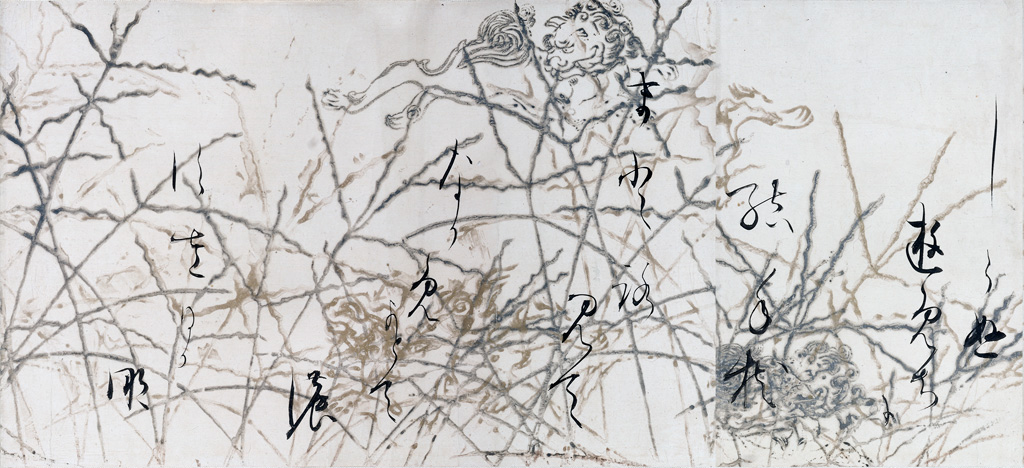
He uses straight and wavy lines to give the plants more movement and length.
David Mach

He uses lines to create a face and figure in the places where lines are more concentrated.
Michelangelo

He has soft strokes for lines to give a fluffy texture to the beard and give definition to the face and clothes.
Jackson Pollock

He uses a variety of lines to give a more abstract display and design.
Wednesday, December 19, 2012
The Shadow Knows
1. The shape and outline of the object.
2. It is the fundamental aspect of seeing an object. It also interacts with all our other perceptual responses in helping us make sense of our subjects.
3. By seeing the color and volume of the object.
4. You incorporate the different elements, such as color and volume, of the subject to give it the qualities of what it is.
5. It gives the subject the different kinds of energy that it possesses.
6. It allows you to define the object more and provide more of a dimension to it. You can use different strokes and texture to convey the different emotions of each material.
Vincent Van Gogh

A Pair of Shoes

Van Gogh's Chair

Shoes
Mother Nature Decoded
1. We can take a single stem from that bouquet and choose single trees from that forest to look at and find a way to draw. Looking at the flower will help us draw the proportions of the plant much more easily than concentrating on each part of the plant as we come to it.
2. Looking at the flower will help us draw the proportions of the plant much more easily than concentrating on each part of the plant as we come to it.
3. The basic growing directions will help show the essence of the object and how they affect the painting and plant as a whole. If you start each observation of a subject by deciding what is most important to its character, you will know where to begin your drawing and how to proceed.
Henri Fantin-Latour

Stll Life with Flower
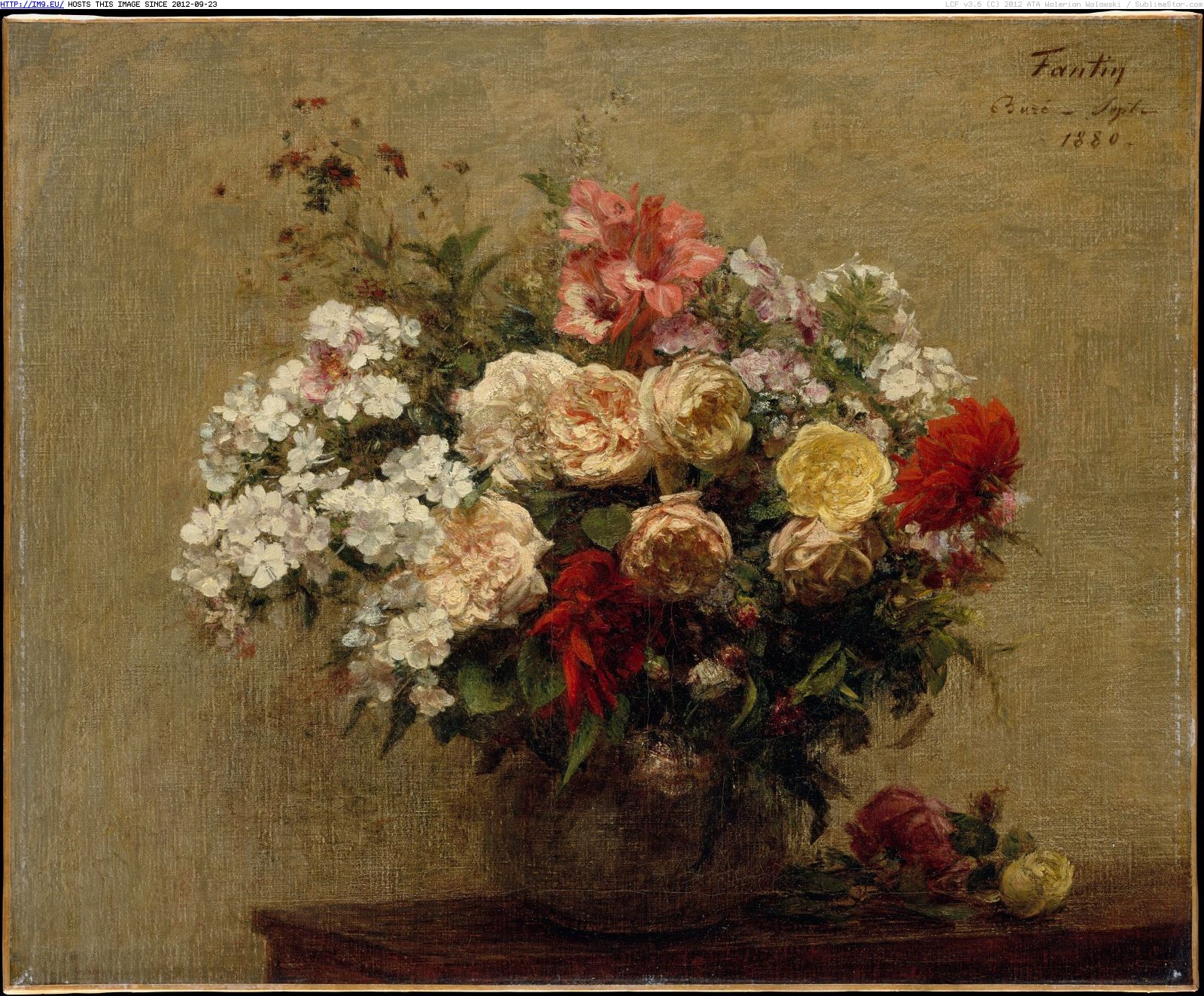
Summer Flowers

Roses in a Bowl
Anne Vallayer-Coster

Bouquet of Flowers in a Terracotta Vase, with Peaches and Grapes
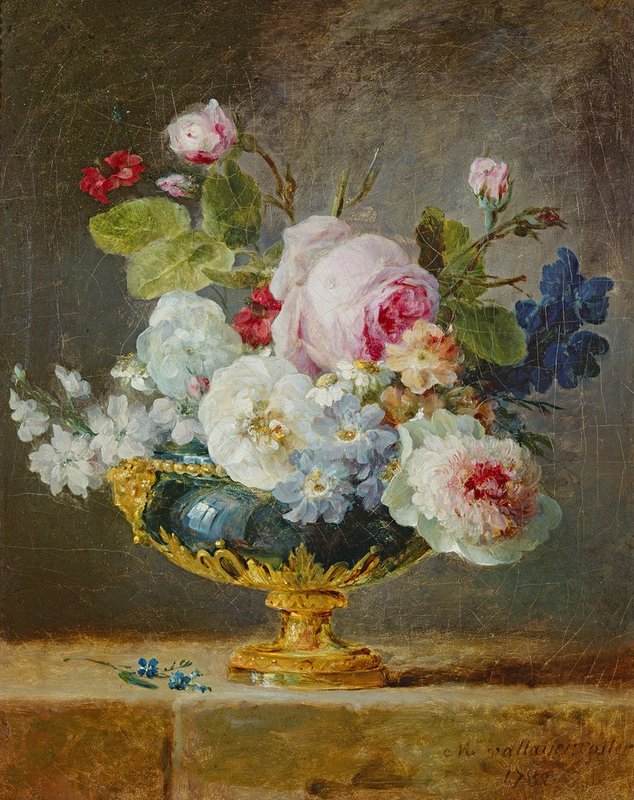
Flowers in a blue vase

Study Of A Bouquet Of Gilly Flowers
Sunday, December 16, 2012
The Beagle Vanishes
De Chirico
Gare Montparnasse
De Chirico
The Disquieting Muses

De Chirico
Piazza d'Italia
Sunday, November 11, 2012
Concentration Idea
1. What is the central idea of your concentration?
My central idea is to make a story of "first love" with my artwork. This would be mostly at high school ages even though at that age they are still naive about what the true meaning of love is, but it is because of the naivety that they would represent first love well. They would bring love to its purest. First love is a very beautiful thing to come across and everyone will come across this feeling someday in their life. I find it able to relate to many people.
2. How will the work in your concentration demonstrate the exploration of your idea?
I'd have different drawings of the beginning, middle, and end of the love. At first they won't know each other, but later on in my drawings, I'd show their developments in their love and then it'd end sadly with their separation.
Sunday, November 4, 2012
Hatching the Pot
1. Lines are enormously useful in describing all kinds of bulging, rolling, bumpy subjects.
2. Since the light is coming from the right and slightly in front of the pot, the shadow on the outside of the pot falls on the left, but the shadow on the inside of the pot is on the right.
3. Curved lines help us feel out the pot’s roundness and because the subtlety of making those lines is a way for us to engage the sensuousness of our reflexes.


2. Since the light is coming from the right and slightly in front of the pot, the shadow on the outside of the pot falls on the left, but the shadow on the inside of the pot is on the right.
3. Curved lines help us feel out the pot’s roundness and because the subtlety of making those lines is a way for us to engage the sensuousness of our reflexes.
Giorgio Morandi


Conor Walton


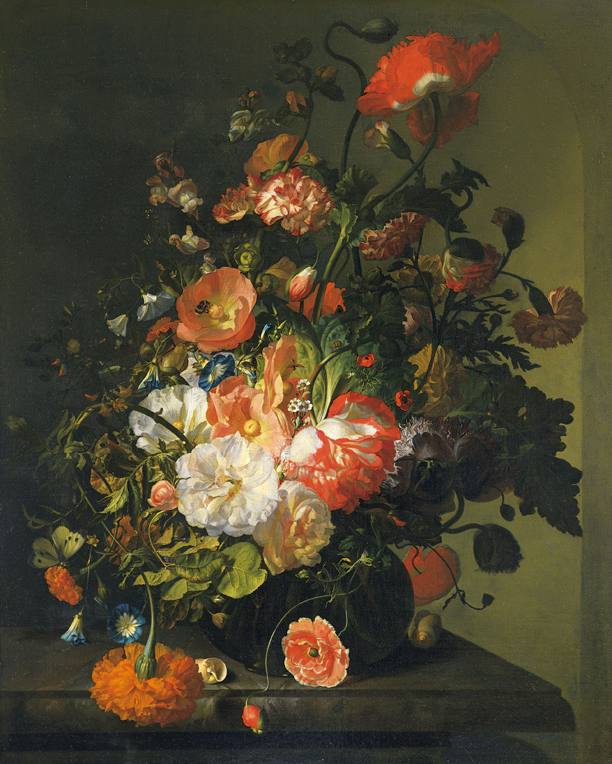
Rachel Ruysch
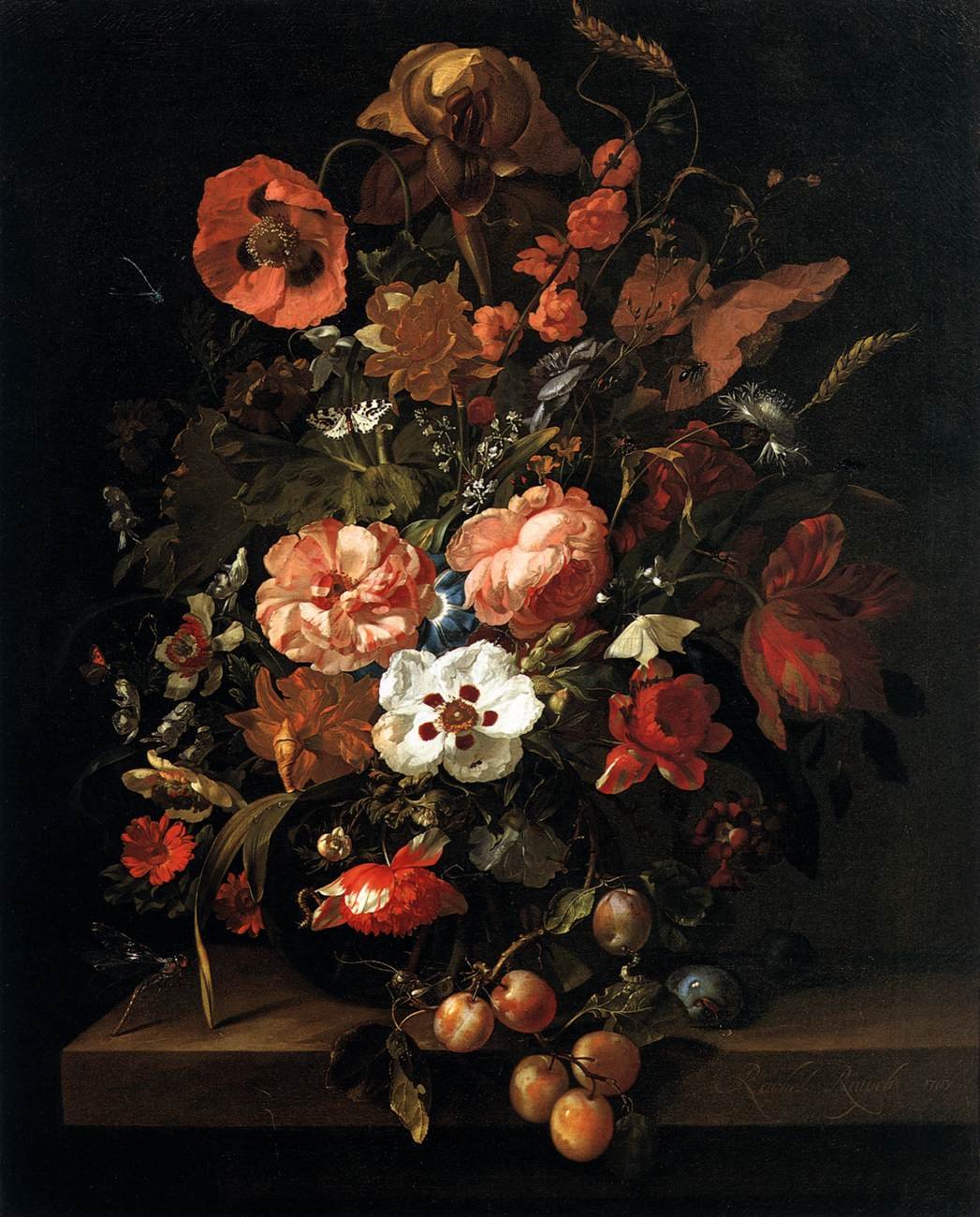

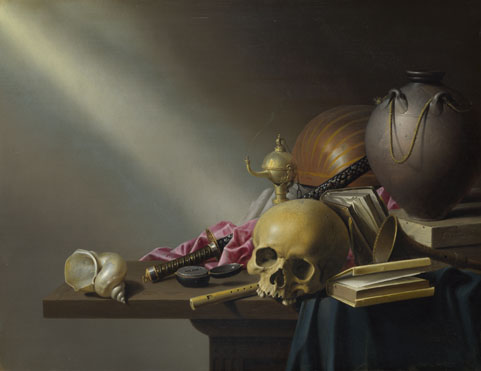
Harmen Steenwyck
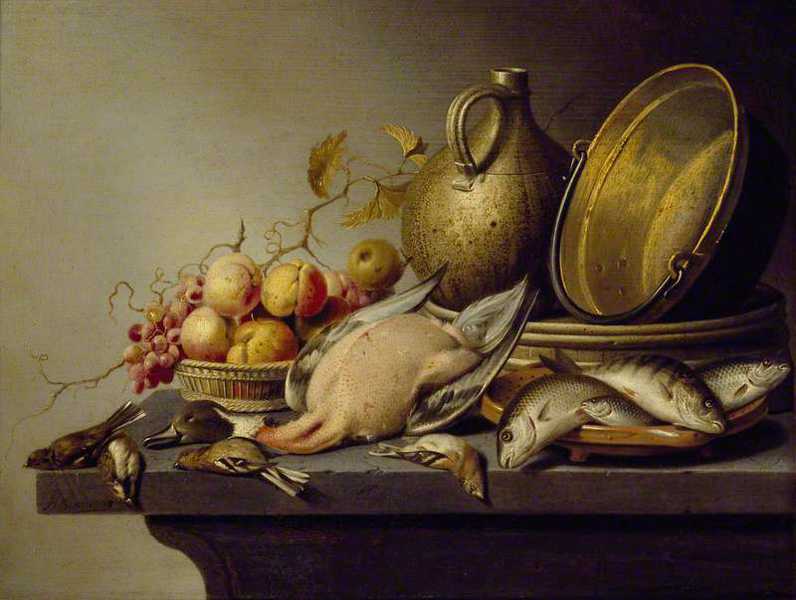
Paul Cezanne


Jan Davidsz de Heem


Subscribe to:
Posts (Atom)